VINYL BRUT    deutsche Version
He had genius, but no diploma.
  MAX ERNST, 1967


In its series FLUXUS +/-, the label Psych.KG will release in about 6 weeks a compilation of music or sound or soundart or no art [To be honest... I don't know what jazz is. A.D., german SWR-Jazz Award 2006] generated e.g. with news racks, extended steam mechanism, tupperware or painting. The official edition is rare as it counts 75 LPs only, plus some "handmade specials" extra.

Austrian poet Wolfgang Kindermann, Yang-Lelaki-Gamelan-Kumpulan, american sound/visual/conceptual artist Andy Ortmann and Knut Aufermann & Marcus Heesch are listed with their contibutions, while the 1st track is based on the artwork umweg um wege, feat. Knut Aufermann on 3rd of February 2005 at ausland in Berlin, the concert lasted 34:48 Minuten in total. This release edited 2020 in Leipzig cuts it down to under 10 minutes, which clearly legitimates the title "umweg um wege [Version einer Abkürzung]"... in English something like "a way round ways [version of a shortcut]".

Painting on air, painting on vinyl? Way back in 2002, Knut Aufermann already draftet it in his MA dissertation for Sonic Arts, Feedback Processes - an investigation into non-linear electronic music : "... the more abstract connection between live music and live tempera painting was made concrete by gluing two contact microphones onto the canvas so that they pick up painting noises. The microphones remain as part of the painting and will later act as speakers to play back the recording of the music and painting session in a future exhibition."

[Discogs]


Er hatte Genie, aber kein Diplom.
  MAX ERNST, 1967

In der Reihe FLUXUS +/- des Labels Psych.KG wird in voraussichtlich circa 6 Wochen eine Schallplatte veröffentlicht, die eine Zusammenstellung von Musik oder Geräuschmusik oder Tonkunst oder Nicht-Kunst [Also, wenn ich ehrlich bin... ich weiß auch nicht was Jazz ist. A.D., SWR-Jazzpreisträger 2006] präsentiert, die z.B. mit Hilfe von Zeitungsständern, erweiterten Dampfmechanismen, Tupperdosen oder Malerei erzeugt wurde. Die reguläre Auflage beträgt 75 LPs, zusätzlich soll es auch noch einige "handmade specials" geben.

Der österreichische Lyriker Wolfgang Kindermann, Yang-Lelaki-Gamelan-Kumpulan, der amerikanische Konzeptkünstler Andy Ortmann sowie Knut Aufermann & Marcus Heesch sind als Beitragslieferanten gelistet, wobei das erste Stück der Schallplatte auf der Arbeit umweg um wege basiert: live-tempera feat. Knut Aufermann am 3. Februar 2005 im ausland in Berlin, der Auftritt dauerte ursprünglich 34:48 Minuten. Die hier im Tonschnitt veröffentlichte Fassung von 2020 hat eine Länge von unter 10 Minuten und trägt somit zurecht den Titel "umweg um wege [Version einer Abkürzung]".

Malerei im Radio, Malerei auf Schallplatte? Knut Aufermann hat es schon 2002 in seiner Diplomarbeit Feedback Processes - an investigation into non-linear electronic music [zu deutsch etwa "Rückkopplungsprozesse - eine Untersuchung in nicht-linearer elektronischer Musik"] skizziert: "... die eher abstrakte Verbindung zwischen Live-Musik und Live-Malerei wurde konkretisiert, indem zwei Kontaktmikrofone auf die Leinwand geklebt wurden, um die Malgeräusche aufzuzeichnen. Die Mikrofone verbleiben als Teil des Gemäldes und werden später als Lautsprecher agieren, um die Tonaufzeichnung der interdisziplinären Session in einer zukünftigen Ausstellung wiederzugeben."

[Discogs]

30  DAYS OF RADIO ART    deutsche Version
Maybe on the last day it's the first time we have visual arts...
  TINA KLATTE, 2016

allerdings [révolte no.2]

live-tempera feat.
Caroline Kraabel ... committed to improvisation as a way of living and working. As a saxophonist she makes music in unexpected ways and performing in unexpected places...
Sarah Washington Artist and activist. Exceptional artist host, team mediator, performance and radio programmer...
Chris Weaver ... a decade of experience as the studio manager of Resonance FM in London as well as life as a sound artist in Dubai.

Quotes from / Zitate aus
radio revolten · 30 days of radio art
SPECTOR BOOKS, 2018

Leading art institutions such as Tate Modern, the São Paulo Biennial, and Documenta have now recognized that an ongoing artistic use of the airwaves has generated an autonomous genre called radio art. Over the last few decades independent radio stations in North America and Europe have provided crucial support for this art form to develop and flourish. In October 2016 the International Radio Art Festival Radio Revolten, organized by community radio station CORAX, brought together today’s radio artists in Halle [Saale] in Germany. Radio Revolten featured a dedicated radio art station, installations, live performances, conferences, workshops, and public interventions. This book documents the world’s most extensive radio art festival, which presented community radio as an open-access medium for cultural use.
[Source / Order]


Bestimmende Kunstinstitutionen wie die Tate Modern, die São Paulo Biennale und die Documenta haben mittlerweile erkannt, dass eine anhaltende künstlerische Praxis im Äther ein eigenes Genre hervorgebracht hat: die Radiokunst. Unabhängige Radiosender in Nordamerika und Europa haben diese Kunstform in den letzten Jahrzehnten entscheidend unterstützt und mit entwickelt. Im Oktober 2016 versammelte das Internationale Radiokunstfestival Radio Revolten, das vom freien Radiosender CORAX veranstaltet wurde, gegenwärtige Radiokünstler in Halle [Saale], Deutschland. Radio Revolten präsentierte eine eigene Radiokunststation, Installationen, Live-Performances, Konferenzen, Workshops und öffentliche Interventionen. Der Band dokumentiert das weltweit umfangreichste Radiokunstfestival, bei dem es um freies Radio als öffentlich zugängliches Medium für den kulturellen Gebrauch ging.
[Quelle / Bestellung]

LIVE @ RADIO  REVOLTEN     english version
You can't make a painting without breaking eggs!
  JOHN BISSET, 1997


Chris Weaver hat sich verpflichtet, via Kontaktmikrofone die Geräusche von der Leinwand abzunehmen, während Sarah Washington versuchen wird, mit Hilfe ihres brandneuen OP-1 die übertragenden Radiokunst-Installationen in den unterliegenden Stockwerken einzufangen... und ja, Caroline Kraabel war schnell dafür zu haben, sich mit ihrem Saxophon einzumischen.


Man könnte es für eine der typischen Londoner freien Improvisationssessions halten, tatsächlich aber findet das als Radiorevolte in Halle an der Saale auf UKW 99,3 und MW 1575 kHz statt. Wem das zu "old school" ist, dem sei der Livestream auf http://radiorevolten.net ans Ohr gelegt: zum dritten Mal in der Rundfunkgeschichte wird live im Radio ein Bild gemalt... für alle, die jetzt glauben, sich verlesen zu haben, nochmal kurz & knackig:

Malerei... live... im Radio? Allerdings!!
http://radiorevolten.net/de/event/marcus-heesch-live-tempera


Chris Weaver will pick up sound of painting via contact-microphones [which he sealed in revolutionary red], while Sarah Washington wants to pick up sounds from the transmitting radioart installations downstairs with her brandnew OP-1 [whatever that pretends to be]... oh, and Caroline Kraabel might involve with her saxophone.


What seems to be a London cookin' session, turns out to be a radio revolt happening in Halle in Germany. So tune in to UKW 99,3 or MW 1575 kHz, alternatively go for the livestream on http://radiorevolten.net, 'cause there is really gonna be a painting made on radio...

... and yep, it's really gonna be live!!
http://radiorevolten.net/en/event/marcus-heesch-live-tempera

BRUCE'S  FINGERS    deutsche Version

By turn of the year Bruce's Fingers listed the CD Friendly Faces as sold out. Right now it can be confirmed, there will be about another dozen copies - of the limited edition of 100 - soon avaliable.


Bei Jahreswechsel wurde die CD Friendly Faces beim Bruce's Fingers-Label als ausverkauft gelistet. Mittlerweile ist klar, daß dort bald ca. ein Dutzend weitere Exemplare aus der auf 100 limitierten Auflage lieferbar sein werden.


CD Friendly Faces @ Bruce's Fingers


FINISSAGE


Joker Nies' Omnichord


21inch


duo [annette krebs · marcus heesch]


one


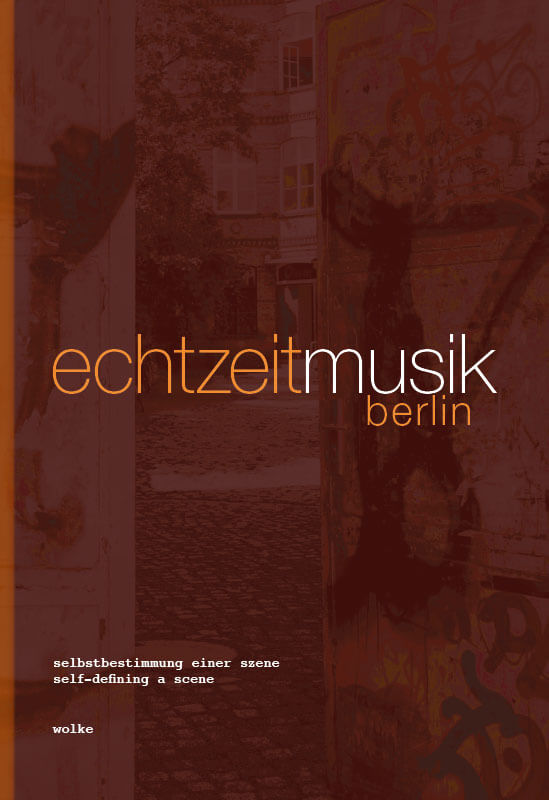
ECHTZEITMUSIK   

Selbstbestimmung einer Szene
Es gibt nicht die Geschichte, sondern nur eine Vielzahl von Geschichten, nicht die Theorie, sondern unterschiedlichste, teils widerstreitende Konzeptionen und Herangehensweisen.
Theoretische Texte, Erinnerungen, Statements und künstlerische Beiträge einer [Musik-]Szene, in deren Kontext ein Projekt wie live-tempera entstehen konnte. Zweisprachig.

Self-defining a scene
There is not the history, but a myriad of histories, not the theory, but the widest range of somewhat discordant conceptions and approaches.

Theoretical texts, memories, statements and artworks also by musicians, who took part in or left their mark on live-tempera [Rhodri Davies, Axel Dörner, Phil Durrant, Kai Fagaschinski, Annette Krebs, Michael Renkel]. Bilingual.


[Q
uelle] / [Bestellmöglichkeiten]
[Source] / [Order]


CD @ MIKROTON RECORDINGS

This compilation of Echtzeitmusik Berlin has been assembled and designed to become a companion to the book of the same title published in 2011 by Wolke Verlag, which reflects on a multilayered phenomenon within Berlin’s musical culture, a phenomenon whose influence and meaning has effects that extend far beyond Berlin itself. Having emerged in the open spaces of the city’s east side after the fall of the Berlin Wall, and rooted in a cultural coordinate system made up of squats and free improvisation, punk and New Music, social experimentation and performance art, the Echtzeitmusik scene has passed through an eventful history of musical and social development and matured into a wide spectrum of predominantly experimental forms of music, bordering on fields as varied as noise, electronica, trash pop, free jazz, and contemporary composed music, not to mention performance and sound art. Not every Echtzeitmusik protagonist has the chance to appear on this compilation which can only represent a temporary excerpt. The organism - a network of individuals in a constant state of flux, in permanent interaction - is living. Echtzeitmusik changes. And also through this compilation.
[Source / Order]
 [Quelle / Bestellmöglichkeiten]

echtzeitmusik-website   
ANGEZETTELT   

Interdisziplinaritäten zwischen Musik und Malerei sind diskutabel, ihre Ergebnisse in der Konsequenz erst recht. Einige deutsche improvisierende Musiker thematisieren das [besonders gerne in einem Fluxus-Kontext] theoretisch recht nachhaltig und radikal, deren britischen Kollegen eher gelassen beiläufig und sowieso nur auf Nachfrage.

Der neuralgische Punkt in der [deutschen] Diskussion liegt offenkundig in der Vergänglichkeit des Materials. Gerne wird Eric Dolphys "... after it's over, it's gone, in the air" zitiert, um sofort Vergleichbares dem visuellen Ergebnis abzuverlangen oder sowas wie interdisziplinäre Authentizität reflexhaft in Frage zu stellen. Das den Entstehungsprozeß Überdauernde scheint verdächtig.


Auf einem kleinen, interdisziplinären Festival vor 10 Jahren in der Kölner WERFT war zu beobachten, daß die meisten Maler in ihrem Arbeitsprozeß dieser Forderung gerecht wurden... einer legte gar in einem dramatischen Finale [und ja, auch die Musik wurde betont dramatisch] Feuer an sein Werk - wie spontan das gewesen sein mag, sei dahingestellt. Ironischerweise wurden die ein knappes Dutzend Festivalarbeiten anschließend für einige Zeit ausgestellt ["after it's over, it's gone, in the air"?], wobei natürlich nur zwei oder drei der Werke in einem final unversehrtem Zustand präsentiert werden konnten. Nicht, daß der Grad der Versehrt- oder Unversehrtheit ein Kriterium für Qualität wäre... da wohne man einfach mal einem Auftritt von GOKAN bei, wenn Helge Leiberg auf Folien eines Overhead-Projektors aquarelliert.


Die hier präsentierte Bildreihe deutet leicht an, was angestoßen wird, wenn vermehrt fluide Farbe [ein Schelm, wer jetzt an Fluxus denkt] zum Einsatz kommt: ein nicht zu kontrollierender Vorgang, der seine eigenen Spuren nach der Entstehung mehr oder weniger verwischt - um es präventiv gleich vorwegzunehmen, Analogien zur menschlichen Fähigkeit des Erinnerns sind rein zufällig und schon gar nicht beabsichtigt. Überhaupt: kann man machen, muß man aber nicht...


angezettelt · feat. Joker Nies, Hans Schneider · 70 cm x 125 cm

Interdisciplinarities between music and painting are something to argue about, and so are their outcomes. Some German improvising musicians like to broach the theoretical issue of that [especially in a Fluxus context] quite sustained and radically, while their British colleagues seem to prefer a rather casual comment - well, if you're insisting to make it an issue.

The focus in the [german] discussion is obviously on momentariness of process. Which is the moment, where Eric Dolphy's "... after it's over, it's gone, in the air" will be inevitably cited, followed by the bottom line that visual outcome has to mirror that, if you dare to talk "interdisciplinarity". Suspicion falls on what survives the work in progress.


At a small, interdiciplinary festival in Cologne 10 years ago you could recognize most of the painters clinging to that formula... actually one played safest and fanned the flame in a dramatic finale [yep, music too became extremely dramatic] - how spontaneous could that be? Ironicly the nearly a dozen of festival artworks were exhibited for some time ["after it's over, it's gone, in the air"?], nonetheless only two or three of them could be presented in sound condition. Well, any state of condition is not directly a sign of quality, is it? By the way, wherefore don't miss Helge Leiberg painting in watercolours on overhead-projected foils, if you get the chance.


The images here may give a slight hint on what originates with a more fluid matter [anyone for Fluxus?]: hardly a process to control, as it is slowly covering some tracks of origin, ongoing still after the interdisciplinary event. Now, this can't be the kind of unrighteous "overdub" that Ben Watson back in 2001 believed to see on the first live-tempera paintings, but how righteous can it be with no realtime to what?


If you are fond of this kind of theoretical questioning, you might like as very well this online discussion [at the point, where they slowly jammed into art issues] by mainly American improvising musicians and followers - not for the faint of heart, and thanks to Annette Krebs for the link.
FEAT. HANS SCHNEIDER   english version

52 cm x 39 cm
Vor fast genau 10 Jahren sind wir uns kurz vor dem gemeinsamen Auftritt in Köln das erste Mal begegnet. Er konfrontierte mich unter vier Augen ziemlich schnell, und mit einem Gesichtsausdruck, der keinen Zweifel am Ernst der Situation ließ, mit der Frage zu meinen Hörgewohnheiten. Die konnte mich eigentlich, soweit war ich mir schon gewiss, nicht in Schwierigkeiten bringen. Verunsichert war ich trotzdem... und das so ungefähr gefühlte 3 Minuten vor dem Auftritt. Warum diese Frage? "Ich habe früher oft mit bildenden Künstlern gearbeitet, leider hatten die allzu oft keine Ahnung von der improvisierten Musik. Tatsächlich haben die sich nie ernsthaft mit der Materie auseinandergesetzt."

Als man mir Wochen zuvor in Berlin mitteilte, ich würde mit Hans Schneider auftreten, hatte ich keine Ahnung. Das ist dann der Moment, in dem man sich als Bildender, der unter Verknüpfungsdefizit leidet, einfach mal bei der sich nächst bietenden Gelegenheit [in diesem Fall während einer der Veranstaltungen in Fine Kwiatkowskis Tanzatelier] ganz dumm stellt und anwesende Hardcore-Musiker fragt, ob die wüßten, mit wem man da auftreten müsse. "Hans Schneider? DER Hans Schneider?! Bist du dir sicher? Wow!! Wo hast du den ausgegraben?!" Okay, hatte verstanden: Bildungslücke! Überhaupt, mir ist des öfteren aufgefallen, daß Musiker am wenigsten ihresgleichen Komplimente machen, wenn es angebracht wäre, aber in den unerwartesten Augenblicken so richtig über den Klee springen.

Daß dieser Hans Schneider früher u.a. Bassist für Alex von Schlippenbach, Peter Brötzmann, Kenny Wheeler oder John Butcher war, kann man auch etwas detailierter hier nachverfolgen. Ich möchte nur noch wohlwollend bemerken, daß die Abbildungen auf dieser Seite Malereien des Musikers wiedergeben. Und nein, ich habe nicht die Absicht, zukünftig bei "meinen" Musiker\innen nachzuhaken, wie es mit ihren Malgewohnheiten aussieht.


Marcus Heesch
Berlin, August 2012


About 10 years ago we met right before the gig in Cologne for the very first time. Face to face, and serious as deadly can be, he wanted to know about my listening habits. I was quite sure, there was nothing to complain about, but still I felt a bit unsettled, as it were a few minutes to start. This question... why?! "I've worked a lot with visual artists. Regrettably they had been clueless about improvised music much too often. As a matter of fact they had never really grappled with it."

Weeks before in Berlin, when I've been told to work with Hans Schneider, I had no idea... "Who?" Well, that's the moment, when you wrap yourself in blissful ignorance and pluck up courage to have some hardcore-musicians coughing up, who the funk you're gonna have to deal with. "Hans Schneider? THE Hans Schneider?! Are you sure? Wow!! You really dug up the dude?!" So far another gap in my education! By the way I noticed many times, that musicians are delightfully capable of misplacing compliments, especially for the likes of their own.

Hans Schneider was a sideman to Alex von Schlippenbach, Peter Brötzmann, Kenny Wheeler, John Butcher... well, dig here. Just want you to pay regard to the images of his paintings. And no, from now on I don't intend to find out about the painting habits of "my" musicians.
Marcus Heesch
Berlin, August 2012